Fabric Earrings

Skip to results list
6 items
Column grid
Column grid

Filter

From the House

The story behind the edit

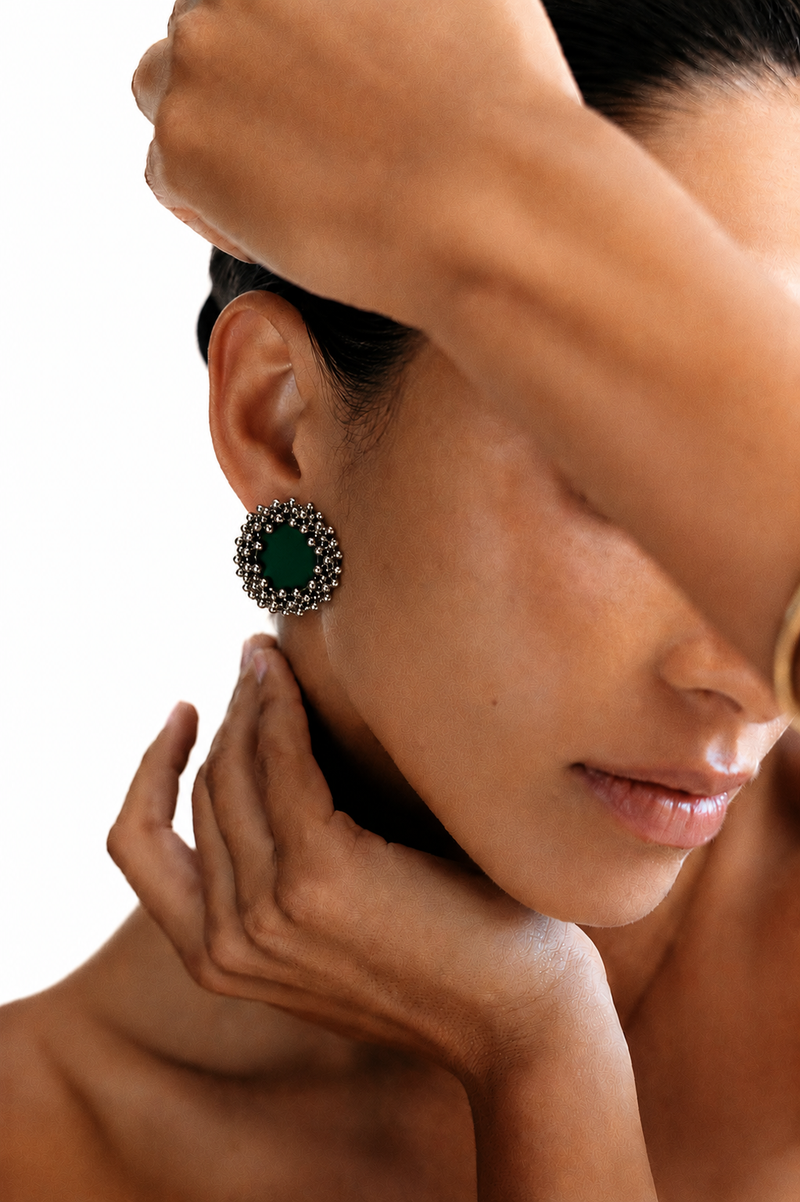
Every House of Falguni earring is built on fabric. It starts as offcuts, cloth left over from the kurtas, stoles and dresses, too small to cut a garment from and too good to throw out. It is shaped by hand, backed so it holds its form, then finished with ghungroo bells, kundan settings or mirror work depending on the style.

Continue reading Close

This is the edit where the fabric is the whole story rather than the ground for something else. The reason to wear it is weight: a statement-sized earring in brass announces itself by the end of an evening, and the same shape in fabric does not. It also allows colour that metal cannot, which is why these are the pairs that work against a plain kurta or a black dress.

Because each pair is cut from a different part of a length of cloth, no two are the same. That is a consequence of the method rather than a feature we added to it.

What Offcuts Are For

A garment workshop produces cloth it cannot use. Sleeve curves, hem trims, the last third of a metre. In most places it goes into a sack and then into landfill, because it is too small to cut anything from and it is nobody's job to solve. Working it into jewellery is not a sustainability gesture bolted on after the fact. It is the reason these earrings exist at all: the pieces came out of the offcuts, not the other way round. A pair uses a few square inches of cloth that had no other future. That thinking runs through the house, and we set it out properly in made slowly, made to last.

Frequently Asked Questions

What are fabric earrings?

Earrings whose body is textile rather than metal. The cloth is cut, shaped and backed by hand, then finished with beads, bells or stones. The findings that touch your ear are metal; the visible body is fabric.

Are all House of Falguni earrings fabric earrings?

Yes. Fabric is the base across the whole range, not one option within it. This edit gathers the styles where the fabric is the finished surface, rather than a ground for shell or pearl detail. Browse the full earrings collection to see the range.

Fabric or metal, which should I buy?

Fabric wins on weight and colour, metal wins on formality and longevity. We put the two side by side in fabric earrings versus metal earrings.

Are fabric earrings durable?

Yes, with the caveat that they are textile. They will not dent, bend or tarnish the way metal does, which is a genuine advantage over a long life. What they will not survive is soaking. Treated the way you would treat a good scarf, a pair lasts years.

What happens if they get wet?

Water can mark fabric and, on printed styles, lift colour. If a pair is caught in the rain, let it dry flat and away from direct heat rather than rubbing at it. Rubbing is what damages the surface, not the water itself.

Do the prints vary between pairs?

Yes. Each pair is cut from a different part of the cloth, so placement shifts from one to the next. The pair you receive will not match the photograph exactly, for the same reason a hand-dyed bandhani never repeats precisely.

Which fabric earrings suit office wear?

The Ruby Red Drops and the Kamal Drops. Both are single-colour and sit close to the ear, so they read as considered rather than loud. For co-ord sets specifically, see what earrings to wear with a co-ord set.

Are they heavy?

No. This is the main reason the house works in fabric at all. Even the larger styles stay light enough for a full day, which is not true of an equivalent shape in brass.

How do I clean them?

Do not wash them. Wipe the surface gently with a dry cloth, and keep perfume and hairspray off the fabric by getting ready before you put them on.