Last updated: September 2026. Quick answer: Fabric neckpieces wrapped by hand over a shape and hung from a silver-tone chain, finished with cowrie shell and bead. Approximately 50 cm / 20 in, so the pendant sits around the sternum, above the chest.
A neckpiece asks a different question of an outfit than earrings do. Earrings frame a face, and you see them in profile or not at all. A neckpiece sits on the plane you actually look at while someone is talking, which makes scale the entire decision. Too large and it wears you; too small and it disappears into the neckline.
These are cut clean and meant to be worn single rather than stacked. Made by hand in small batches in Ahmedabad.
Cloth at the Throat
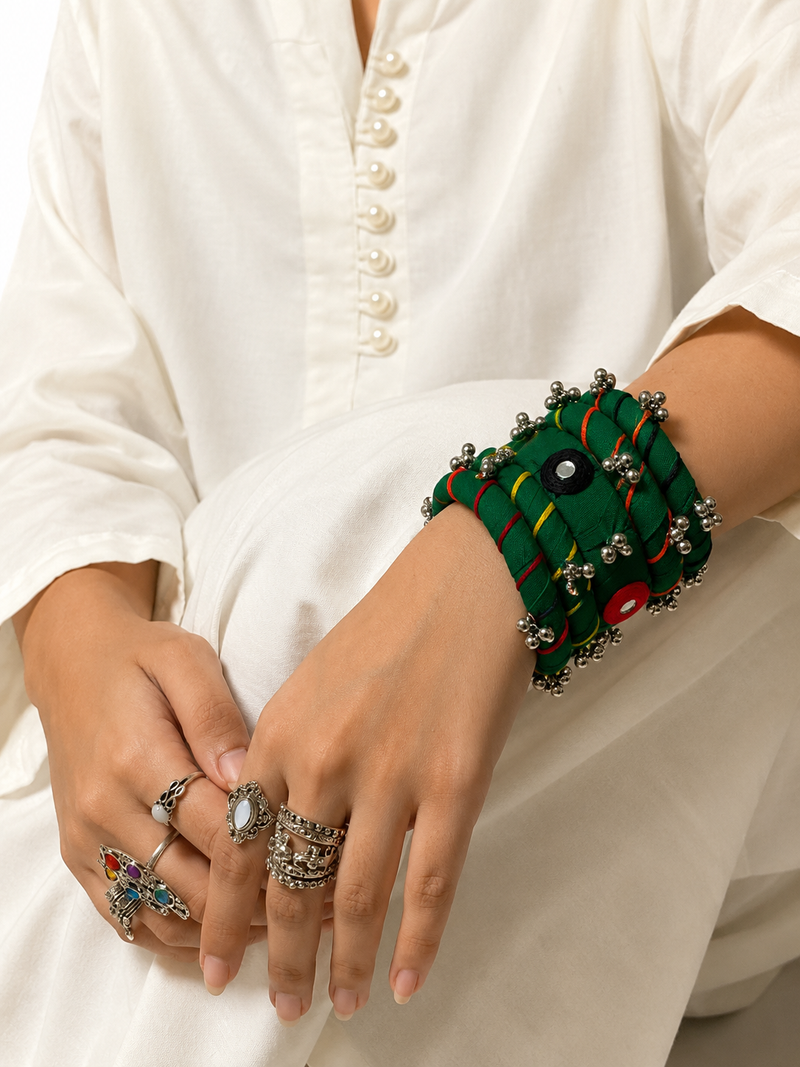
Indian jewellery has always been comfortable with materials that are not precious. Cowrie shells, glass, lacquer, thread, mirror, seed and bone all appear in regional traditions alongside gold, and often on the same body. The idea that jewellery must be made of something valuable to be worth wearing is a fairly recent and fairly narrow import. Working in fabric sits inside the older, broader tradition, where what mattered was the making rather than the melt value. If you want that argument at length, read why handmade accessories elevate an outfit.
The cowrie deserves its own note, because it is the material here most people recognise without being able to name. It is a real sea snail shell, small and glossy, with a ridged opening along its underside. For centuries it worked as currency along the Indian Ocean trade routes, light enough to carry by the sackful and near impossible to counterfeit, and it reached deep inland long before minted coin did. It never left: cowries are still stitched into Banjara mirror-work, knotted into Rajasthani tassels and worked through the folk jewellery of the north-east. On these pieces they hang as charms against the printed cloth, which is why a shell necklace made this way reads as craft rather than as a souvenir from a beach holiday.