Last updated: September 2026. Quick answer: Ghungroo earrings are earrings finished with real ghungroo (dancer's) bells. Ours are tied on by hand, one bell at a time, so they carry a small sound as you move. Four styles, ₹999–₹1,599: three built on fabric, one on a brass base.
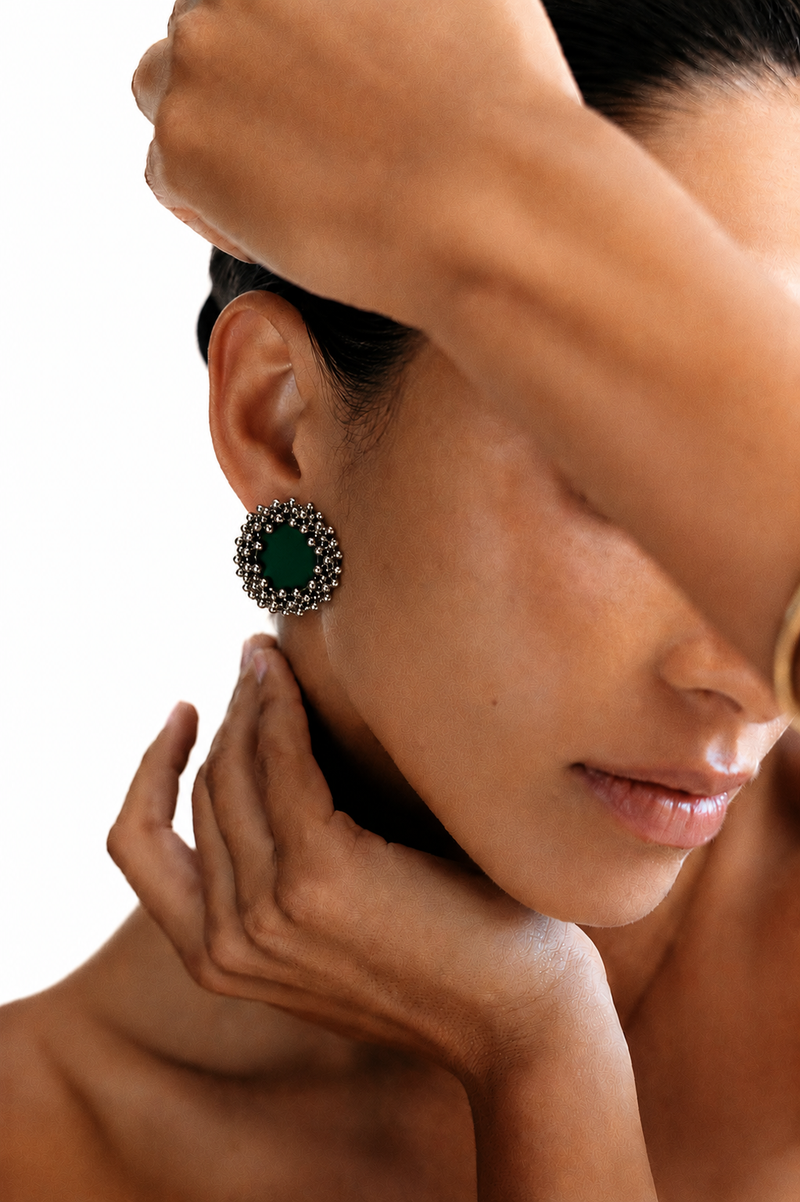
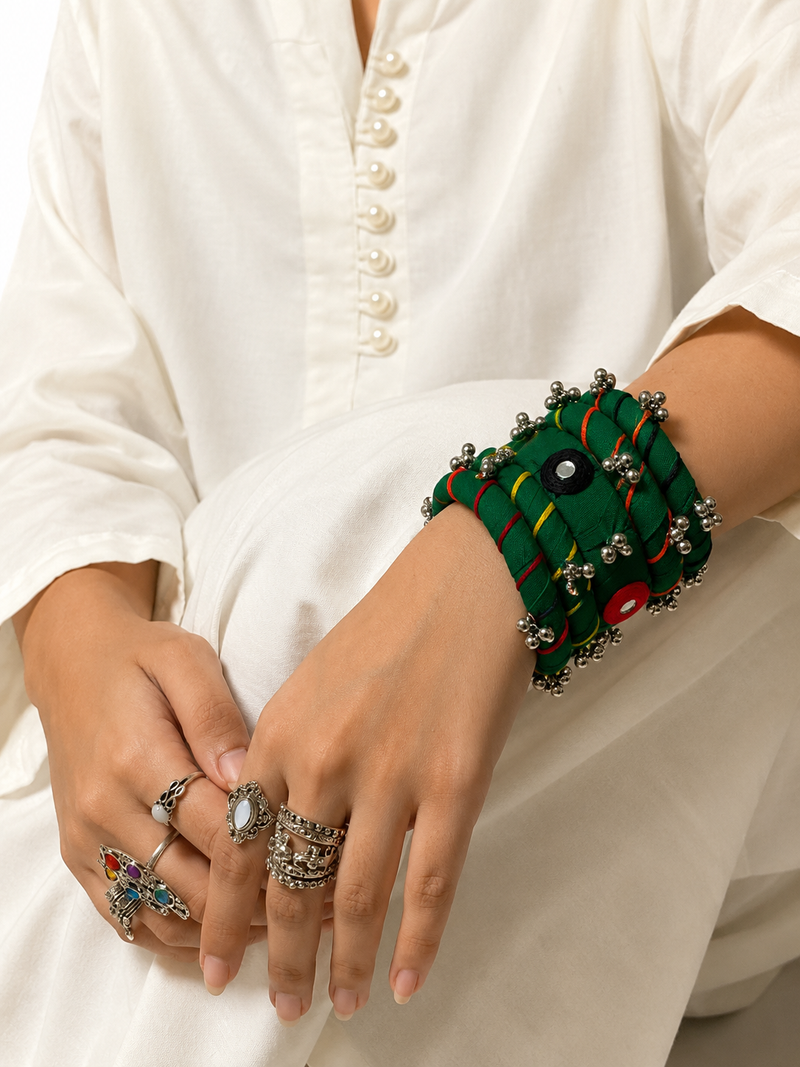
Every bell is tied on by hand, one at a time, and that is where most of the making time in these styles goes. The Ghungroo Studs keep it to a few bells, small enough for a working day. The Chandbali hangs a row beneath a kundan crescent, the most festive of the four. The Geometric Ghungroo sets them against printed fabric in a cleaner, more contemporary shape. The Riwaayat is the lightest and the most block-print led.
What the four share is restraint. A ghungroo tips into costume very easily, and the line between heritage and fancy dress is mostly a question of how many you use. These stay on the right side of it.
What Each Pair Is Actually Made Of
This is worth stating plainly, because “ghungroo earrings” elsewhere usually means oxidised metal, and three of these four are not metal at all. The bells are always real metal ghungroo. What changes is what they are tied to.
The four ghungroo styles, by base material
| Style |
What it is built on |
Best for |
Price |
| Riwaayat |
Printed fabric, with antique-finish ghungroo |
Everyday, and the lightest of the four |
₹999 |
| Geometric Ghungroo |
Fabric-covered base with ghungroo bells |
A contemporary shape with a print |
₹1,299 |
| Ghungroo Studs |
Brass base with a ghungroo bell finish |
Office wear; 1.5 cm, four colours |
₹1,499 |
| Chandbali |
Fabric-covered base with a kundan-set crescent |
Navratri, Diwali and weddings; 6 cm drop |
₹1,599 |
So if you specifically want fabric jewellery rather than metal, the Riwaayat, the Geometric Ghungroo and the Chandbali are the three to look at, and the wider fabric earrings edit has seventeen more. If you want metal, the Studs are the brass one. Building the crescent on cloth is also why the Chandbali can hang 6 cm and still sit light on the ear.
Why the Bell Matters
In Kathak the ghungroo is not decoration, it is an instrument. A dancer wears anywhere from fifty to two hundred bells on each ankle and is expected to control them, to sound them on the beat and hold them silent between. Learning to stop them ringing takes longer than learning to make them ring. That is the tradition these earrings borrow from. Not the ornament, but the idea that sound is something you can wear and command. We traced the whole journey in from classical dance to everyday jewellery.