Ajrakh Motifs

House of Falguni · AhmedabadCraft Resources · Printable

Textile · Block print · A named record

Ajrakh Motifs

Clouds, raindrops, dates, almonds, a spider’s web. Ajrakh has always had a vocabulary. Here are ten of its motifs, drawn and named, with what the written record says they mean.

Ten motifs · twenty-five more names · nine independent sources · two free sheets to print. By Deesha Goswami. Published 23 September 2026.

A note from the studio

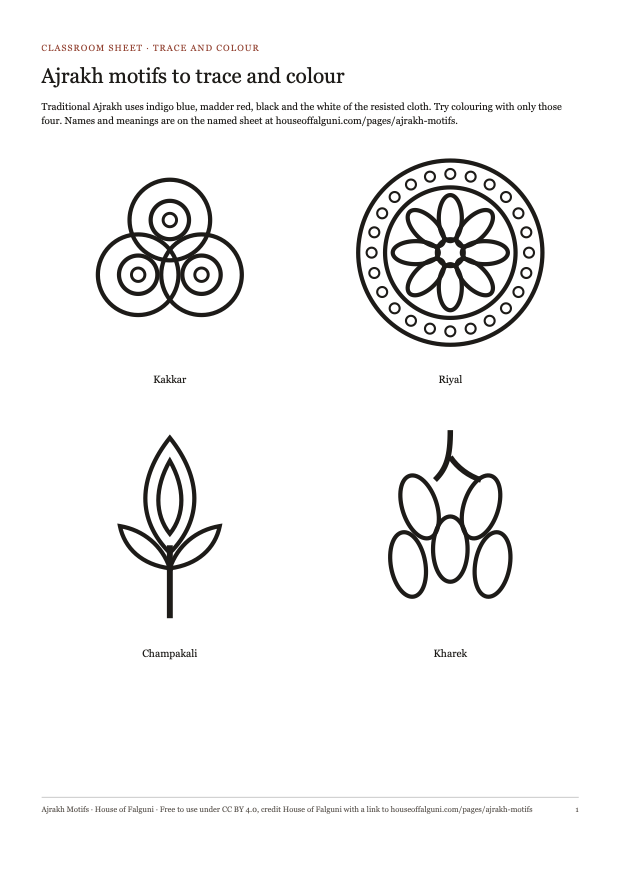
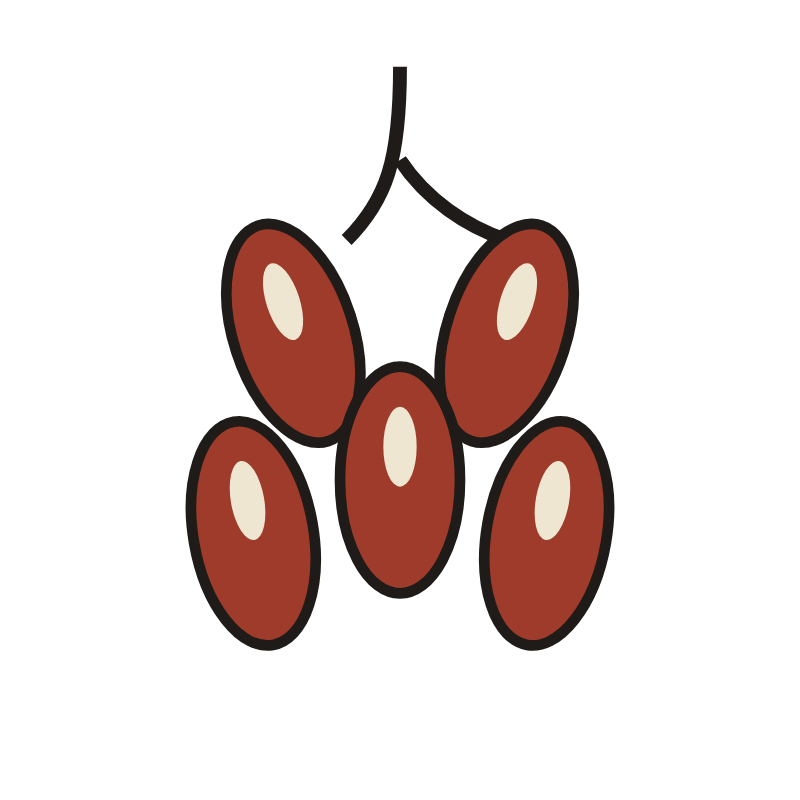
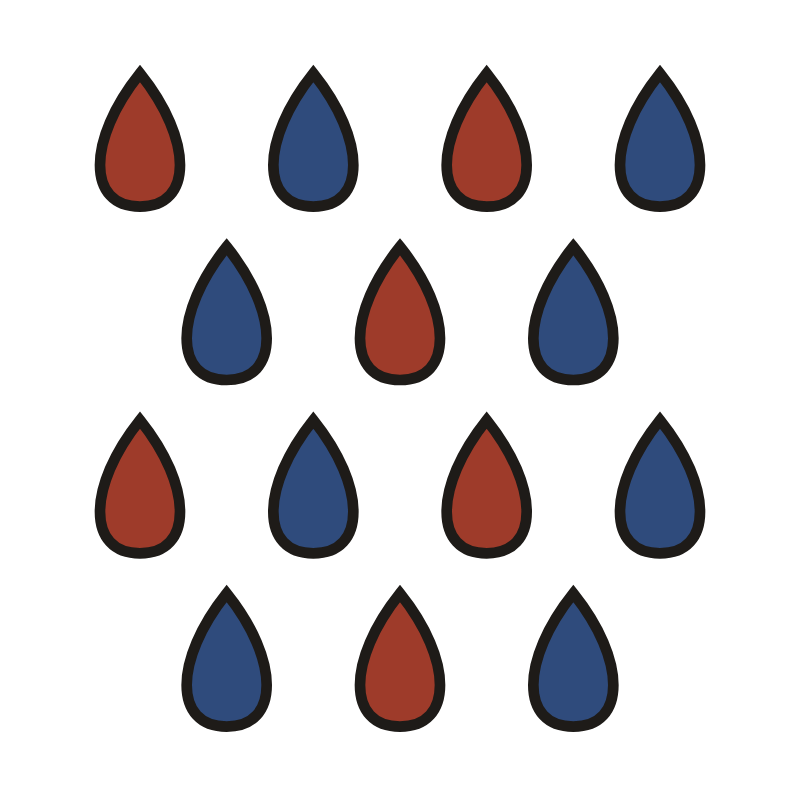
A block printer in Kutch does not ask for “the paisley”. The word is keri, the mango. The cloud is kakkar, the raindrops are mifudi, the dates are kharek. These names have been passed down in Kutchi and Sindhi through Khatri families for generations, and they are rarely written down in one place.

One of them is far older than the rest. The trefoil on the robe of the Mohenjo-daro ‘priest-king’, carved more than four thousand years ago, has the same three lobes as the cloud Ajrakh printers call kakkar. It is why the craft is so often traced to the Indus Valley.

We work with Ajrakh on our Mashru silk bags and a modal silk stole, and we wanted its names to sit beside the cloth. This is a reference, not a rulebook. We have drawn only what written sources describe, listed every one of them, and left the rest undrawn. If you print Ajrakh and see something we have wrong, tell us. We will correct it and date the change.

Deesha Goswami, founder, House of Falguni
Take it with you

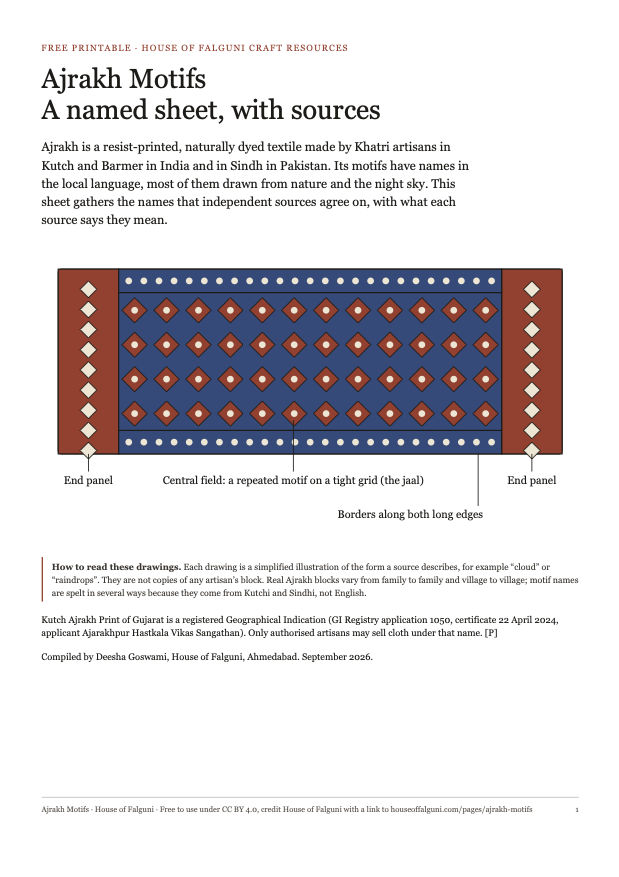
Cover of the Ajrakh Motifs named sheets PDF

Named sheets, with sources

Five A4 pages. Ten drawn motifs, the parts of the cloth, the printing stages, twenty-five more names and every source.

Download the PDF ↓
Cover of the Ajrakh motifs trace and colour classroom sheet

Trace and colour

Three A4 pages for a classroom or studio: line drawings of all ten motifs, and a grid to design your own jaal.

Download the PDF ↓

Motifs at a glance

Each drawing is a simplified illustration of the form a source describes. None is a copy of an artisan’s block; real blocks differ from family to family.

01

Cloud · Trefoil

Kakkar

A three-lobed cloud. A matching trefoil is carved on the robe of the Mohenjo-daro ‘priest-king’, more than four thousand years old, and it is the main reason Ajrakh is traced back to the Indus Valley.

What it depicts

Cloud

Also written

Kakar, Kakker

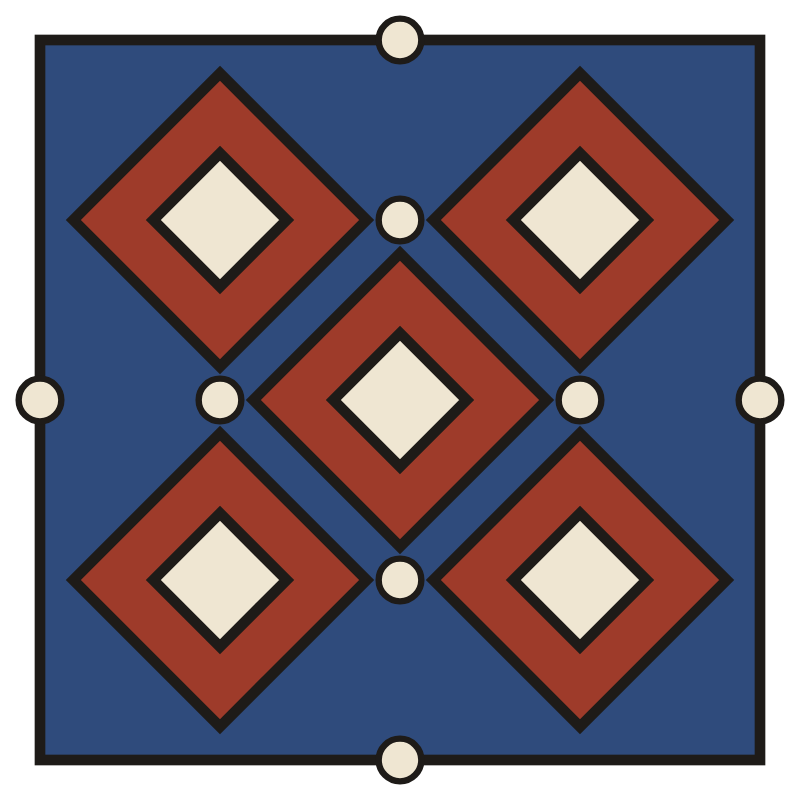
Kakkar, the cloud motif of Ajrakh, drawn in indigo and madder by House of Falguni
10

Layout · Lattice

Jaal

The grid that holds everything together. The Crafts Museum describes the Ajrakh field as a repeated motif on a tight grid; the jaal is that grid.

What it depicts

Lattice

See it on

Ruhani, a diamond jaal

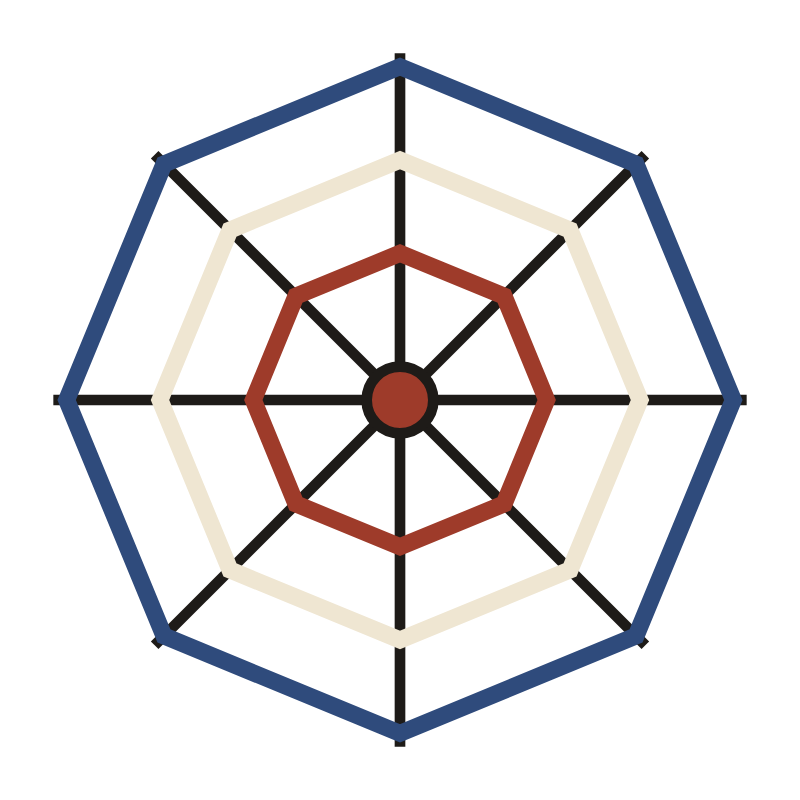
Jaal, the lattice motif of Ajrakh, drawn in indigo and madder by House of Falguni

The anatomy of an Ajrakh

A field, framed

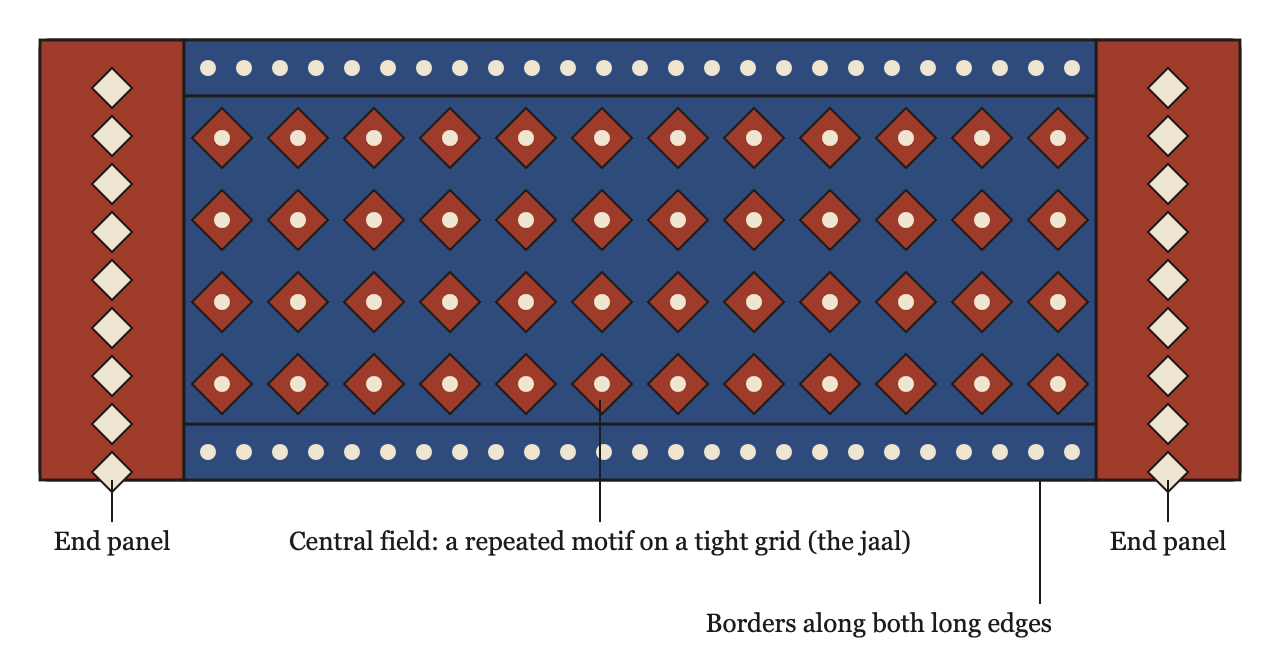
A traditional Ajrakh has a large central field, one motif repeated on a tight grid, framed by borders and end panels. An Ajrakh sample in the M.S. University of Baroda’s Textile Art Museum records the names of each part.

Diagram of a traditional Ajrakh cloth: central field of repeated motifs on a grid, borders along the long edges, end panels at both ends
ChhedaThe design printed at both ends of the cloth.
BopaiA running border that separates the motif sections.
MadaguloThe lowest border; the source glosses mada as girl and gulo as flower.
TinnaroThree lines above the madagulo.
ButtoThe motif row above the tinnaro.

Layout after the Crafts Museum, New Delhi; part names from the MSU Baroda museum sample.

Printed in layers

One cloth, many passes

Ajrakh is printed and dyed in layers, each with its own block and its own name, recorded by the Gaatha craft archive. Read how we describe the process on The Craft.

RekhOutline printing, which leaves the white outlines.
KatPrinting the black outlines.
Phulli / KanResisting the small star-like areas.
Gach / KhorA two-step resist printing.
Ekpuri and BipuriPrinted on one side of the cloth, or on both.

What the colours mean

Two readings of four colours

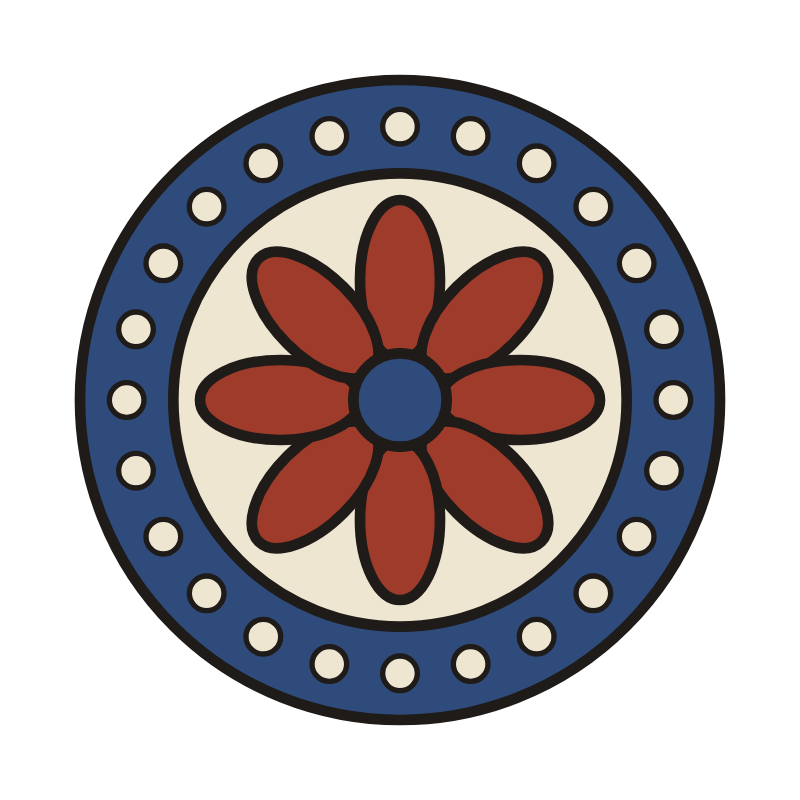
The dyes are not in dispute: indigo, madder and iron on a resisted ground. Their meanings are. We give both readings rather than choose one: D’source at NID, and the more common account found in Gaatha and elsewhere.

Blue

Dye: Indigo.

NID reading: the universe.

Other accounts: the sky.

Red

Dye: Madder.

NID reading: the earth.

Other accounts: the land, or twilight.

Black

Dye: Iron.

NID reading: darkness.

Other accounts: the night.

White

Dye: The resisted cloth.

NID reading: clouds.

Other accounts: the stars.

Still to be drawn

Twenty-five more names

These names are documented, but no written source we found describes their shape, so we have not drawn them. If you know them, we would like to hear from you. Letters show the sources, listed at the end.

  • MoharW · M · AAlso Ambri Mohar. The word also names the mohur, a gold coin.
  • JalebiG · W · MRecorded as Jalebiya, Jaleyb and Jileb.
  • TaavizI · W · MAlso Tavith and Taweez; the word means an amulet. Wikipedia also lists Taweez Challo and Hasho Taweez.
  • PenchoM · R · AThe Baroda sample uses pencho all over the central field in a one-drop brick repeat.
  • Char pa ekM · R
  • NipadG
  • GrinariG
  • RaiyaG
  • AmlaliyaG
  • SaudagiriGA family of patterns on smaller grids, with more organic motifs inside a symmetrical lattice.
  • SitarM
  • Mohammad shahiM
  • GinniM
  • JimardiM
  • MorpeechA
  • Ishq pechWAlso Badam ishq pech.
  • GhaleechoW
  • WalW
  • ChaanpW
  • ChakkiW
  • ChalloW
  • Moti juranW
  • Hasho jo aslW
  • Hasho selemeeW
  • Hasho jo bazarW

A protected name

Kutch Ajrakh Print of Gujarat is a registered Geographical Indication. Application 1050 was filed by the Ajarakhpur Hastkala Vikas Sangathan and registered on 22 April 2024, with 95 authorised users, most of them Khatri artisans in Ajrakhpur, Dhamadka and nearby villages (GI Registry). The drawings on this page illustrate traditional motifs. They are not Kutch Ajrakh.

In our studio

Where to see Ajrakh at House of Falguni

Ajrakh runs through our block-print collection, on six Mashru silk bags and a modal silk stole. Read what Ajrakh is and how it is made, or how the Mashru silk bags are put together.

Use and credit

Free to print, share and teach

The drawings, sheets and text are published under a Creative Commons Attribution 4.0 licence. Print them, adapt them, put them on a classroom wall. Teachers do not need to ask. Please credit House of Falguni with a link:

Ajrakh Motifs, House of Falguni (2026). houseoffalguni.com/pages/ajrakh-motifs

Corrections are welcome, especially from Ajrakh printers. Write to the studio; every change is dated below. More free resources are on Craft Resources.

Sources

  1. G Gaatha, Indian Craft Archive: Ajrakh Printing, Ajrakhpur (Gujarat)
  2. I International Folk Art Market: artist profile of Sufiyan Ismail Khatri, Ajrakh printer, Kutch
  3. W Wikipedia: Ajrak (section on jaal designs, Sindhi names)
  4. M Ajrakh sample in the Textile Art Museum, Faculty of Family and Community Sciences, M.S. University of Baroda, recorded on Traditional Indian Printed & Resist Textiles (2014)
  5. R The Registry of Sarees: Ajrakh, the ancient craft of block-printing
  6. A Amounee: Ajrakh
  7. L Project LooM: Ajrakh, Part 6, Motifs and meanings
  8. C Crafts Museum, New Delhi, on Google Arts & Culture: Ajrakh, Rhythm of Blues
  9. D D'source, Ajrakh Block Printing, Kutch (Prof. Bibhudutta Baral and Sandhya B., NID Bengaluru)
  10. P Intellectual Property India, GI Registry: Kutch Ajrakh Print of Gujarat, application 1050

Revisions: 23 September 2026, first published.