
To keep flowers fresh in a vase in an Indian home, cut about 2.5 cm off every stem at an angle, strip each leaf that would sit below the water, and change the water every two days, every day in high summer. Then keep the vase out of the sun, out of the path of the ceiling fan and the AC, and away from the fruit bowl.
Do that, and chrysanthemums and carnations last one to three weeks, roses and gerberas four to twelve days. Mogra lasts about a day unless it is kept cold. The rest of this guide is the why, flower by flower, for the heat, the fans and the water we actually have.
Pieces in this guide: Kaali Glass vase ₹1,699 · Quiet Table tray ₹1,199
One thing to say plainly: we don't sell flowers or flower food. Everything here works with a bunch from your local phool market and what is already in your kitchen.
How long Indian market flowers last in a vase
Vase life depends on the variety, how old the flowers were when you bought them and how warm your room is, so read these as ranges, not promises. Each figure comes from the source named in the row.
| Flower (as sold) | Vase life | The one thing that extends it |
|---|---|---|
| Chrysanthemum (shevanti, guldaudi) | 14 to 21 days | Strip the leaves from the lower third and cut above any woody base Nebraska Extension; UC Davis |
| Carnation | 7 to 14 days | Keep it away from ripening fruit: carnations are sensitive to ethylene Illinois Extension; Oklahoma State |
| Orchid (dendrobium sprays) | 15 to 20 days | Clean, plain water, away from fruit: plain water did better than a commercial solution in the trial Thai postharvest trial on 'Red Sonia', 25°C; Oklahoma State |
| Rose (gulab) | 4 to 12 days | Re-cut the stem under water, and keep it away from fruit Illinois Extension; Oklahoma State |
| Gerbera | 4 to 12 days | Clean water: bacteria in the vase are one cause of the stem folding below the flower Illinois Extension; UC Davis |
| Tuberose (rajnigandha) | A few days in tap water; about 10 with sugar and citric acid | Sugar with citric acid in the water, so the closed buds keep opening IGKV Raipur review; UC Davis |
| Marigold (genda), loose heads | About 3 days at 27°C | Cold: the same heads lasted 8.7 to 16.3 days at 6°C ICAR-IARI trial on loose flowers |
| Mogra (jasmine), strings | About 1 day | Cold: chilled export packs kept strings fresh to 72 hours TNAU |
At the phool market, buy tight. Each flower has a stage that lasts longest: chrysanthemums two-thirds to three-quarters open, and gerberas with one or two rings of the centre showing pollen (UC Davis); carnations half open, red and pink roses with only the first two petals unfolding, and marigolds fully open (Oklahoma State); lilies with buds just showing colour (University of Florida); rajnigandha with only the bottom two to four flowers open (UC Davis).
The pattern is easy to remember. The long-lasting three are chrysanthemum, carnation and orchid, and two of those, carnation and orchid, are sensitive to ethylene, so the fruit bowl costs most for exactly the flowers that should last longest. Mogra and genda are garland flowers more than vase flowers, and their lives are counted in hours and days.
Cutting and filling, the first ten minutes
Most of what decides a bunch's week happens in the first ten minutes at home. Get the flowers into water within the hour, then do four things.
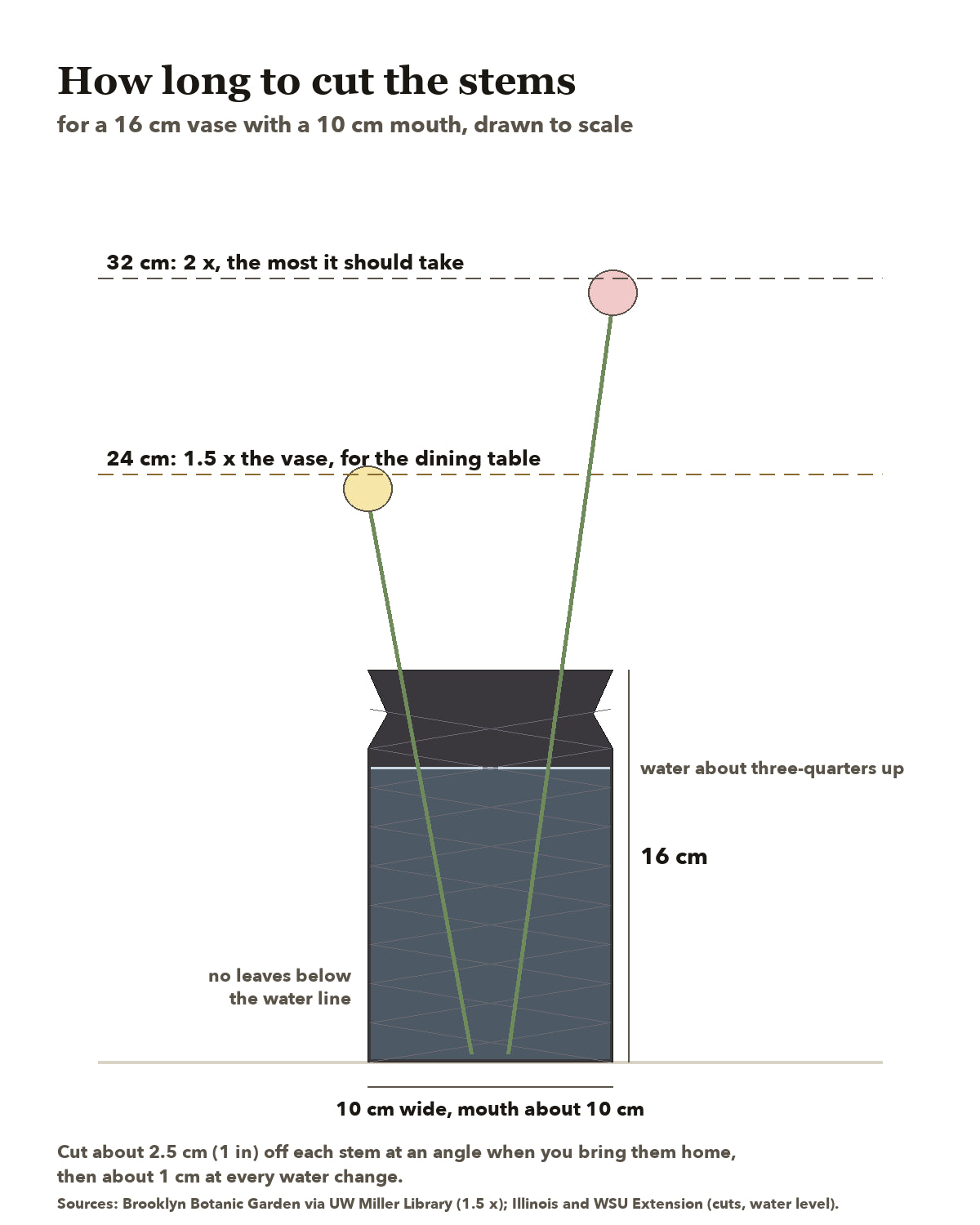
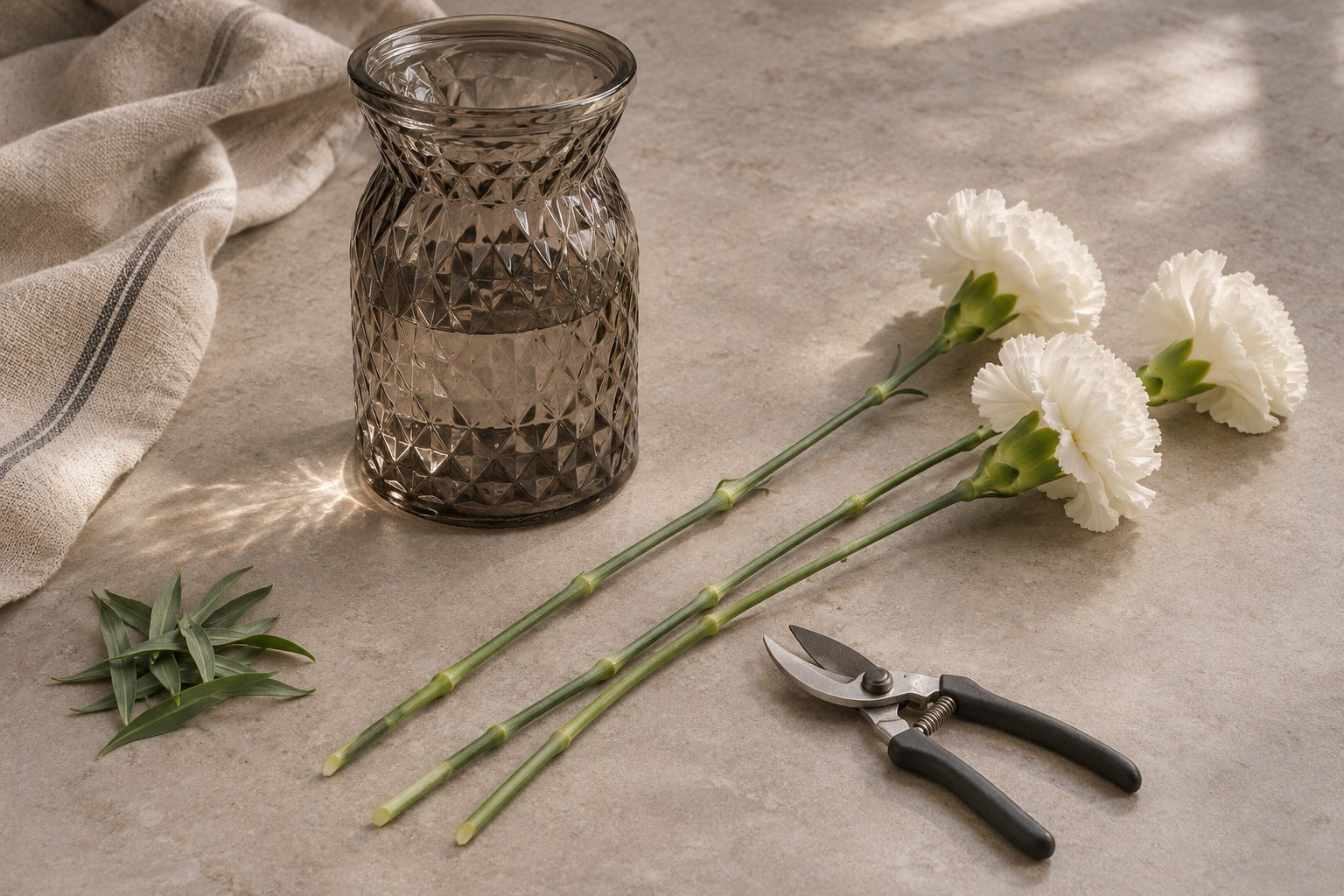
- Cut 2.5 cm off each stem at an angle, with a sharp knife or secateurs. Blunt kitchen scissors crush the stem, and a crushed stem drinks badly (Illinois Extension). Cut under water if you can: removing an inch of stem under water clears the air that blocks it (Oklahoma State).
- Strip every leaf that would sit below the water. A leaf under water rots and clouds it (Illinois and WSU Extension).
- Use a clean vase, washed with warm water, mild soap and a bottle brush. Bacteria left in a vase multiply and block the stems (Nebraska Extension).
- Fill it about three-quarters, and check the level daily: the more flowers in the vase, the more water they drink (WSU Extension).
Heat, fans and the AC: the Indian part
Cut flowers are mostly water, and everything about an Indian room in summer pulls water out of them. Most cut flowers prefer 18 to 22°C (Illinois Extension), and just a few degrees of extra warmth can significantly shorten their life (Oklahoma State). That is why the same roses last longer in January than in May.
The ceiling fan is the quiet thief. Both heat and moving air take moisture from flowers at an accelerated rate (Nebraska Extension), and researchers at Indira Gandhi Krishi Vishwavidyalaya in Raipur name the fan directly: keep vases away from heat, fans and windows. On a dining table under a fan, that means moving the vase to the sideboard after dinner, not leaving it in the breeze all night.
The AC helps, its vent doesn't. A cooled room is closer to what flowers like, but a vase in the stream of cold air is in a draught, and flowers are sensitive to hot and cold draughts alike (Illinois and Nebraska Extension). Put it across the room from the unit.
Sun through the window. Direct sun stresses flowers to open and die quickly (WSU Extension). A bright room is fine; a sunny sill is not.
The fruit bowl. Ripening fruit gives off ethylene, a gas that shortens the life of sensitive flowers such as carnations, roses, lilies and dendrobium orchids (Oklahoma State). Bananas and mangoes ripening on the dining table should sit at the other end of it, and if your fridge holds fruit, don't park the flowers in it overnight.
Delhi in December, Mumbai in August. A North Indian winter is on your side, close to the cool flowers want, as long as the vase stays away from the room heater: heat sources are the first thing Illinois Extension says to keep flowers from. Coastal humidity slows the water the petals lose, but don't mist the flowers in the monsoon: water sitting on petals and leaves invites grey mould (Oklahoma State). Change the water and keep the leaves dry.
Your tap water, sugar, vinegar and bleach
Hard water significantly reduces vase life, and chemically softened water should not be used at all, because of its sodium (Oklahoma State). If your taps grow a white crust, your water is hard. The extension's fix is to acidify it: flowers drink more easily from slightly acidic water, at a pH of 3 to 4.
That is what the packet of flower food from a florist does. It holds sugar for food, bleach to slow bacteria and citric acid to acidify the water, and too much of it does more harm than good (Illinois Extension). The two halves need each other: a vase solution has to carry both a sugar and a germicide, because the sugar feeds the flower and the germicide controls the bacteria that plug its stems (IGKV Raipur review).
- Sugar alone is only half the recipe the research uses: with no germicide, nothing holds the bacteria back.
- Citric acid, sold as nimbu sat, is the acid the research uses. The hydrating solution in the Raipur review uses 300 ppm, which is 0.3 g a litre, a small pinch.
- A home mix from Nebraska Extension: a splash of clear lemon soda for sugar and acid, and a few drops of household bleach.
- Wilted flowers get no sugar: revive them in clean, acidified water with a germicide such as a drop of bleach (Oklahoma State).
In one study the Raipur review cites, tuberose spikes held in 4% sugar with 300 ppm citric acid lasted 10.67 days; in plain tap water, tuberose lasts only a few days.
Arranging in a short, wide vase
A short vase with a wide mouth wants a few big heads or one dense bunch, not a single thin stem lost in the opening. Our Kaali Glass vase is 16 cm tall with a 10 cm mouth, and in its own photographs it holds two yellow pincushion proteas, three white calla lilies, a single pale pink carnation and, on another day, a loose bunch of red spider lilies. Pale and bright flowers stand out best against the dark glass.
Brooklyn Botanic Garden caps the flowers at 1.5 times the container's height: about 24 cm here, which also keeps them low enough for a dining table, where anything over about 30 cm hides the person opposite. The dining table guide works through the rest of that rule, and our Christmas table decor guide puts it to work in December. Filled three-quarters, this vase takes a little under a litre.
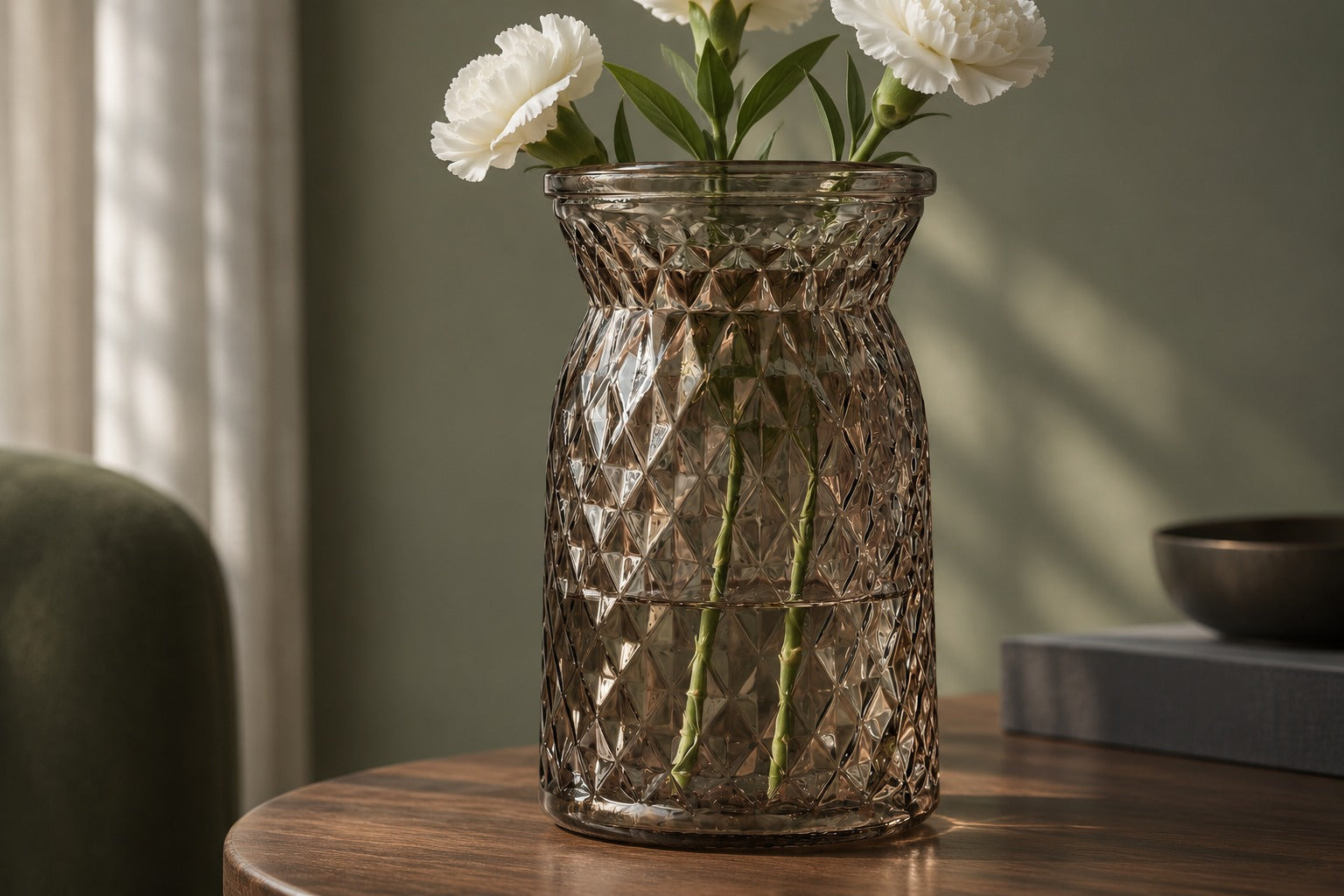
The glass is see-through black, so the water line and the stems stay in view. Cloudy water is the sign that bacteria are growing (Illinois Extension), and in this glass you see it cloud before you smell it: change the water then, not later. Set the vase on a marble tray and a wet base never marks the wood; our marble tray ideas show what else sits well beside it. Wash it by hand with warm water, a little mild soap and a bottle brush; never boiling water, which can crack glass.
Frequently asked questions
How long do flowers last in a vase? Anywhere from a day to three weeks, depending on the flower. Chrysanthemums last two to three weeks, carnations one to two, roses and gerberas four to twelve days, and mogra strings about a day. Warm rooms take days off every one of those figures.
Which Indian flowers stay fresh the longest? Shevanti (chrysanthemum), carnations and dendrobium orchids, which last one to three weeks with clean water. Rajnigandha lasted about ten days in a sugar and citric acid solution in trials, and lasts only a few days in plain tap water.
Does sugar in water help flowers last longer? Only with something that stops bacteria. A vase solution needs both a sugar and a germicide, because sugar on its own feeds the bacteria that block the stems. Flower food packets carry sugar, bleach and citric acid together.
What can I use instead of flower food? A splash of clear lemon soda with a few drops of household bleach (Nebraska Extension's home mix), or a small pinch of citric acid, about 0.3 g a litre, in clean water. Use less rather than more: too much preservative harms flowers.
Does adding vinegar to the water help? A little acid helps flowers drink, since they take up water best at a pH of 3 to 4. Vinegar is an acid too, but the acid the research and the extension guides name is citric acid, so a small pinch of nimbu sat is the surer choice.
How often should I change the water in a vase? Every two days, and every day in an Indian summer. Re-cut about 1 cm off each stem each time, and empty the vase the moment the water turns cloudy.

