Diwali is the one week of the year when an Indian home is looked at properly. Guests come through the door, the good crockery comes out, and things that sat unnoticed for eleven months are suddenly on display. That is the useful thing to remember when choosing what to give.
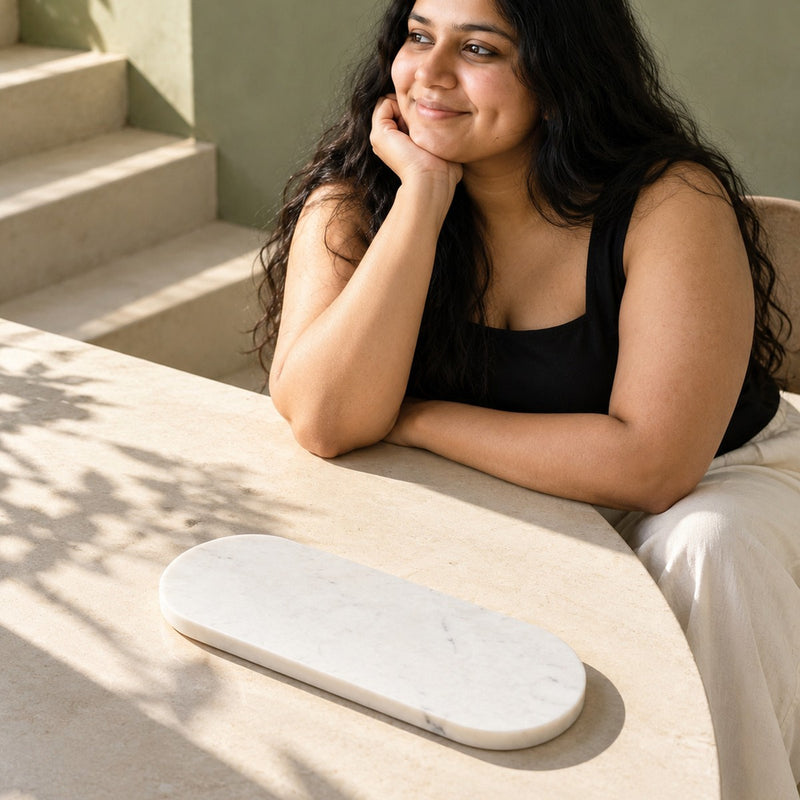
Last updated: November 2026. Quick answer: Handcrafted Diwali gifts for 2026 (Diwali falls on Sunday, 8 November 2026): hand-painted ceramics, hand-carved marble, gold-toned flatware, block-printed diaries, fabric jewellery and hand block-printed Mashru silk handbags, all under ₹3,000 and handmade in Ahmedabad. Also here: quilted cotton makeup pouch sets, totes and hair tool bags from ₹1,499, the handwoven Ikat laptop tote in navy, black or red at ₹3,499, and silk tassel bag charms at ₹599. Orders are dispatched within 24 to 48 hours and delivered in 5–10 business days, depending on where you are. Handmade Diwali gifts under ₹2,000: the Zari Gold Dessert Spoons (₹999), the Quiet Table Marble Tray (₹1,199), the Katha Fabric Diary and the Table Companions marble coasters (₹1,499 each), and the Morning Haze mugs (₹1,999 for two).
What follows is the whole handcrafted range gathered for the season: hand-painted ceramics for the table, hand-carved marble, gold-toned flatware, block-printed diaries, and fabric jewellery light enough to wear through a long evening.
Ready-to-Give Diwali Gifts
If you want something finished rather than assembled yourself, the gifting concierge composes a box to your brief and budget and ships it pan-India. We do not run pre-fixed hampers, and that is deliberate: a box of six unrelated things lands worse than two pieces that speak to each other.
What to Give, and to Whom
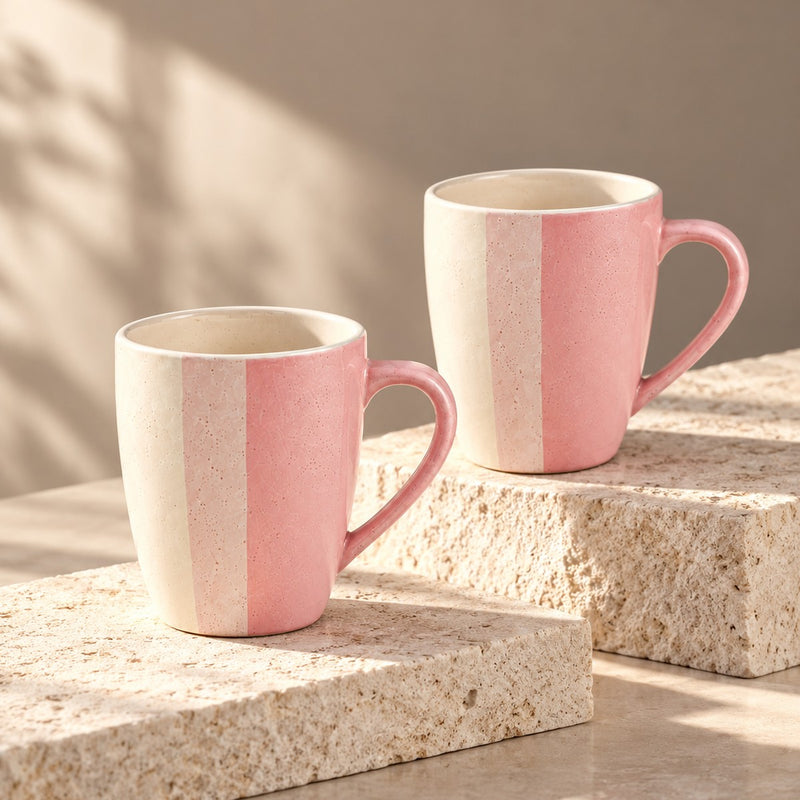
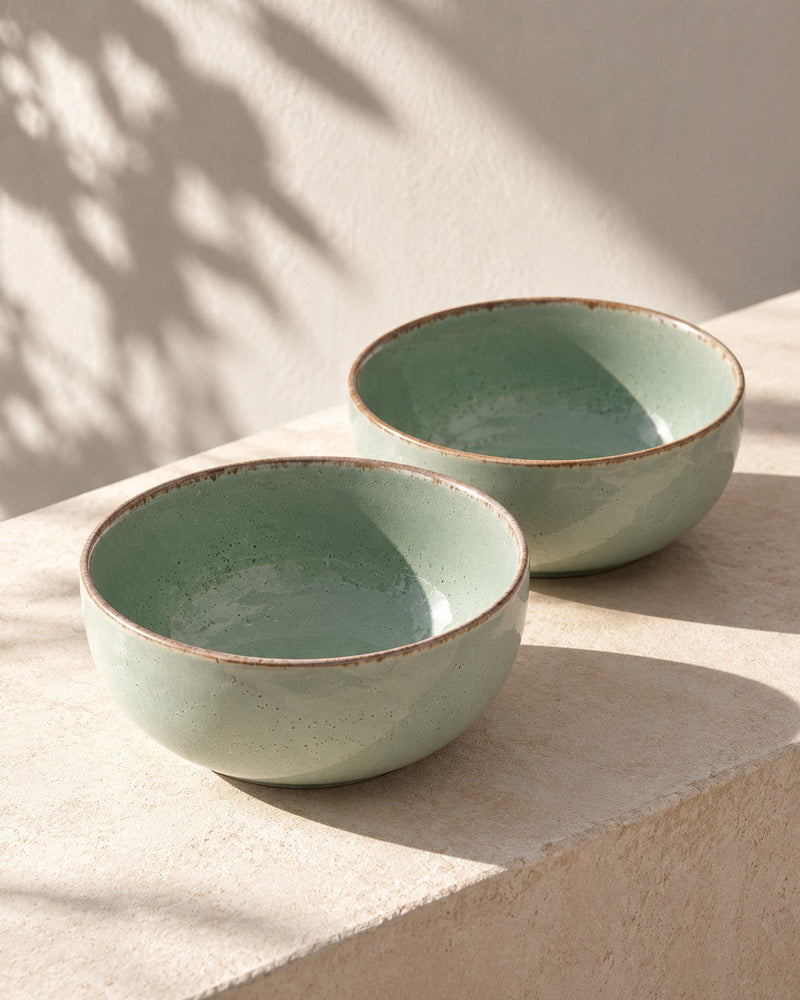
For a home you are visiting, the table is the safest answer, because it is the part of a house that gets used daily rather than admired occasionally. The Saanjh Cups are where we would start. Chai is how most Indian homes welcome people, and a set of six goes into rotation rather than into a cupboard. The Tulsi Green Serving Bowls and the Heritage Blue Quarter Plates do the real work of a festive thali.
For colleagues and teams, the Katha Fabric Diary travels well and needs no size, and the Zari Gold Dessert Spoons read as considered without being personal. Both are covered in our corporate Diwali gifts edit.
On Dhanteras specifically, it is worth being straight: ceramic and marble are lovely objects but they are not the traditional Dhanteras purchase. Metal is. The Zari Gold Dessert Spoons are the legitimate buy in this range, and we set out the reasoning in what to buy on Dhanteras 2026.
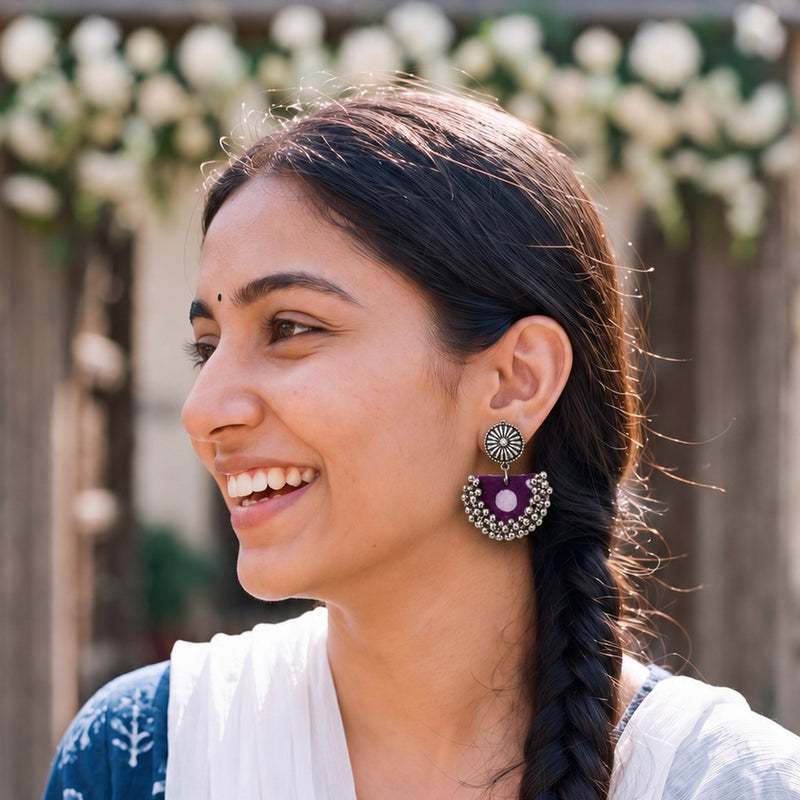
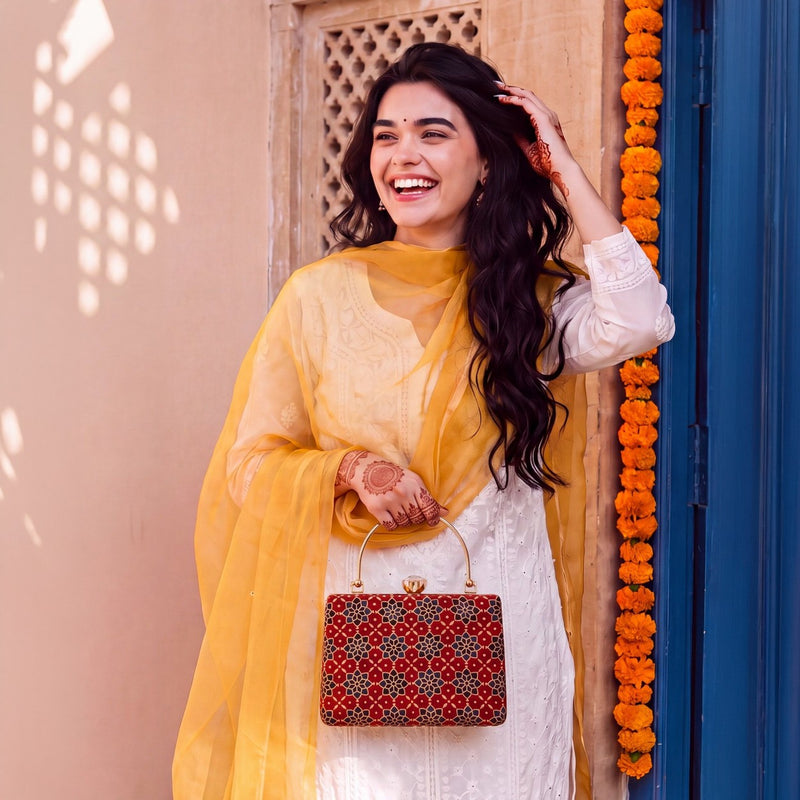
For her, jewellery is the traditional answer and still the correct one. The difficulty is sizing, which is why earrings give better than bangles to anyone whose wrist you have not measured. The Kundan Fabric Earrings and the Riwaayat Earrings are both ₹999 and light enough to wear through a full evening. The Chandbali at ₹1,599 is the festive one, a fabric crescent with a silver-toned top and a row of ghungroo bells hung beneath it. If she already owns more earrings than she wears, a bag avoids the question altogether: the Mashru silk handbags are hand block-printed in Ajrakh on mashru silk, ₹2,999 each, and every one is a single piece, so no one else at the party will carry the same.
For family and close friends, give the thing that gets used at the next gathering. The Saanjh Cups come as a set of six for ₹2,599, enough for a family table, and the marble coasters at ₹1,499 sit under them. For a sister or a friend you would otherwise buy clothes for, choose something that needs no size: fabric earrings or a diary.
What to Spend
Most Diwali lists are set as a budget per person and filled in afterwards. It is worth knowing where this range actually breaks.
Under ₹1,000, the Zari Gold Dessert Spoons and the fabric earrings, Kundan, Riwaayat and Navy Tassel Mirror Work, all sit at ₹999.
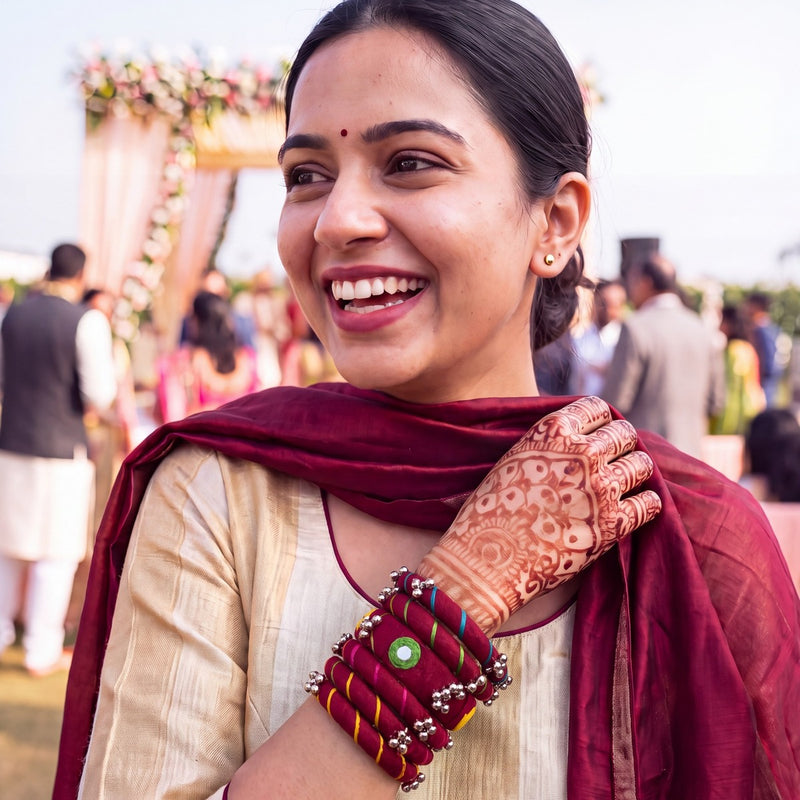
Between ₹1,000 and ₹1,500 is the widest part of the range and where most of this edit falls. The Katha Fabric Diary is ₹1,499 and needs no size. The Lariya Bangles are ₹1,299. The hand-carved marble coasters are ₹1,499.
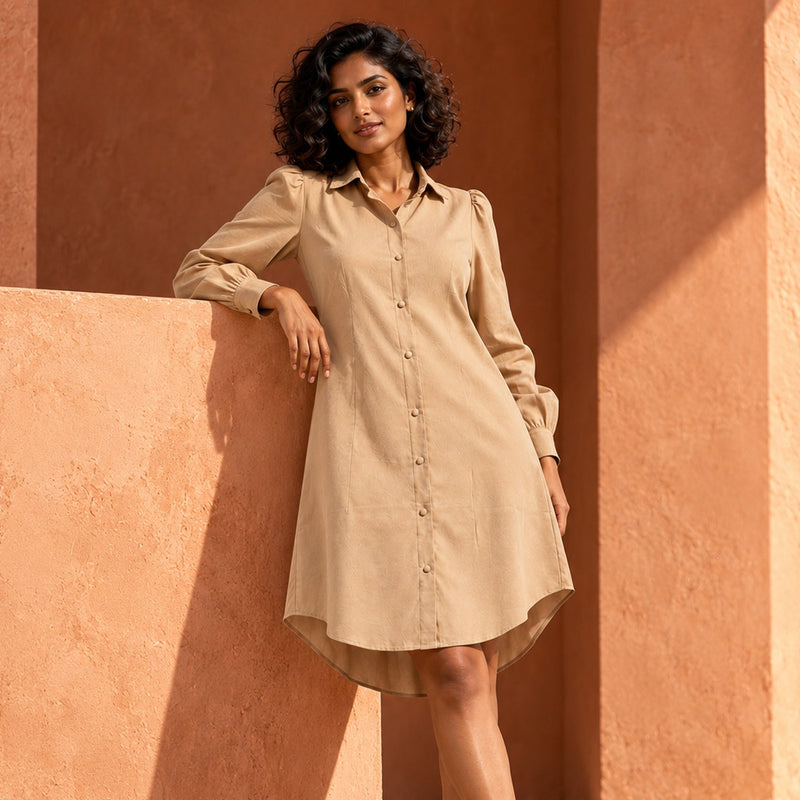
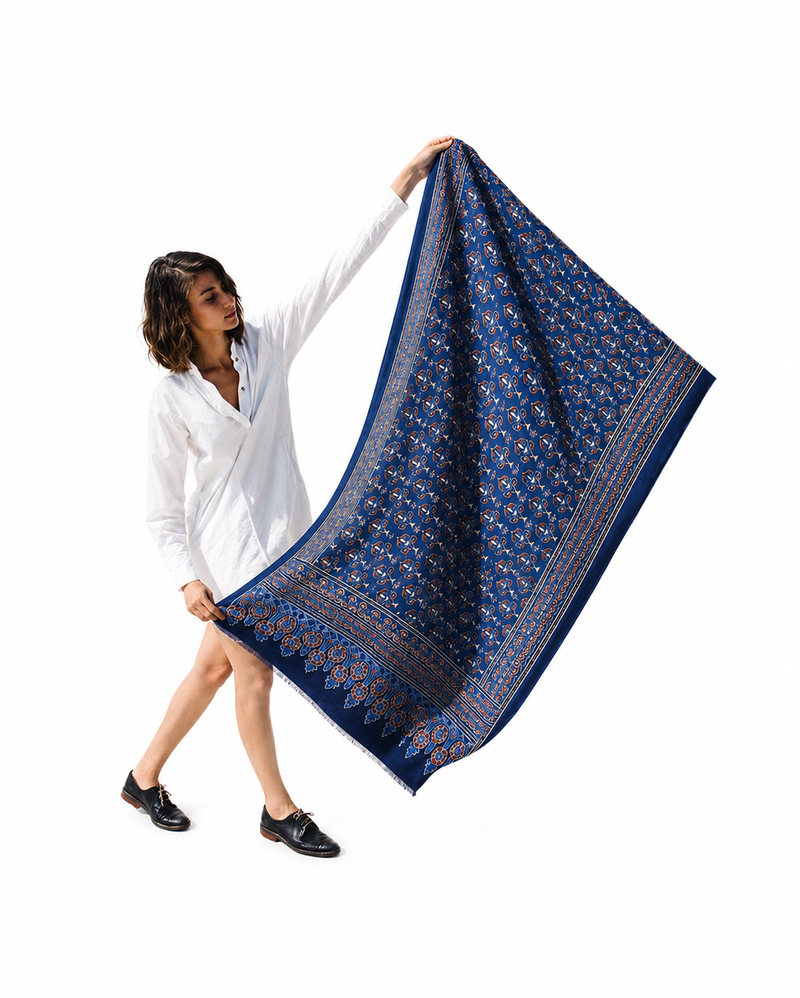
Above ₹1,500 the pieces get larger rather than more decorative: the Saanjh Cups at ₹2,599 for six, the Heritage Blue quarter plates at ₹2,899, the Nilufar modal silk stole at ₹2,499, the Mashru silk handbags at ₹2,999. The combination sets, a kurta or co-ord with its matching earrings, run ₹2,499 to ₹3,199.
The Crockery Question
Crockery is the most given and least examined Diwali present in India. It is given because it is safe, and it is safe because most of it is identical.
The ceramics here are hand-painted and finished in a reactive glaze, which means the colour is formulated to break and pool according to how thickly it sits and where the piece stood in the kiln. Two cups out of the same firing will not match exactly. That is the point of them, and it is also why the runs are small.
They are made in small firings rather than production runs, which is why colour varies a little between batches of the same design. The ceramics are food safe and made for everyday eating and drinking, not for a display shelf.
If crockery is what you came for, start with the hand-painted ceramics, or go straight to the plates and bowls or the mugs and tea cups. The marble is in table accents.